
More of India's homes are now bought at higher price points. Knight Frank counted 1,75,091 homes priced above ₹1 crore sold across the eight largest cities in 2025 — half of all sales, and 14% more than in 2024. Many of those buyers live abroad.
If you are an NRI or OCI cardholder buying in India — whether a family home in Kolkata or an investment — this guide covers the rules, the money, the paperwork and what happens after you get the keys.
What you can and can't buy
Under India's foreign exchange rules (FEMA):
- NRIs and OCI cardholders can buy residential and commercial property in India without permission from the Reserve Bank of India.
- You cannot buy agricultural land, plantation property or farmhouses (inheriting them is a different matter).
- There is no limit on the number of residential or commercial properties you can buy.
How to pay
- Pay through normal banking channels: money sent from abroad, or from your NRE, FCNR or NRO account in India.
- You cannot pay in foreign currency notes or travellers' cheques.
- Keep the bank's remittance records for every payment. You will need them to show how the purchase was funded when you sell and want to send the money abroad.
- Home loans for NRIs are widely available from Indian banks. EMIs are paid from your NRE/NRO account or by remittance.
Before you book: the checks that matter most from abroad
Distance makes due diligence harder, not less important.
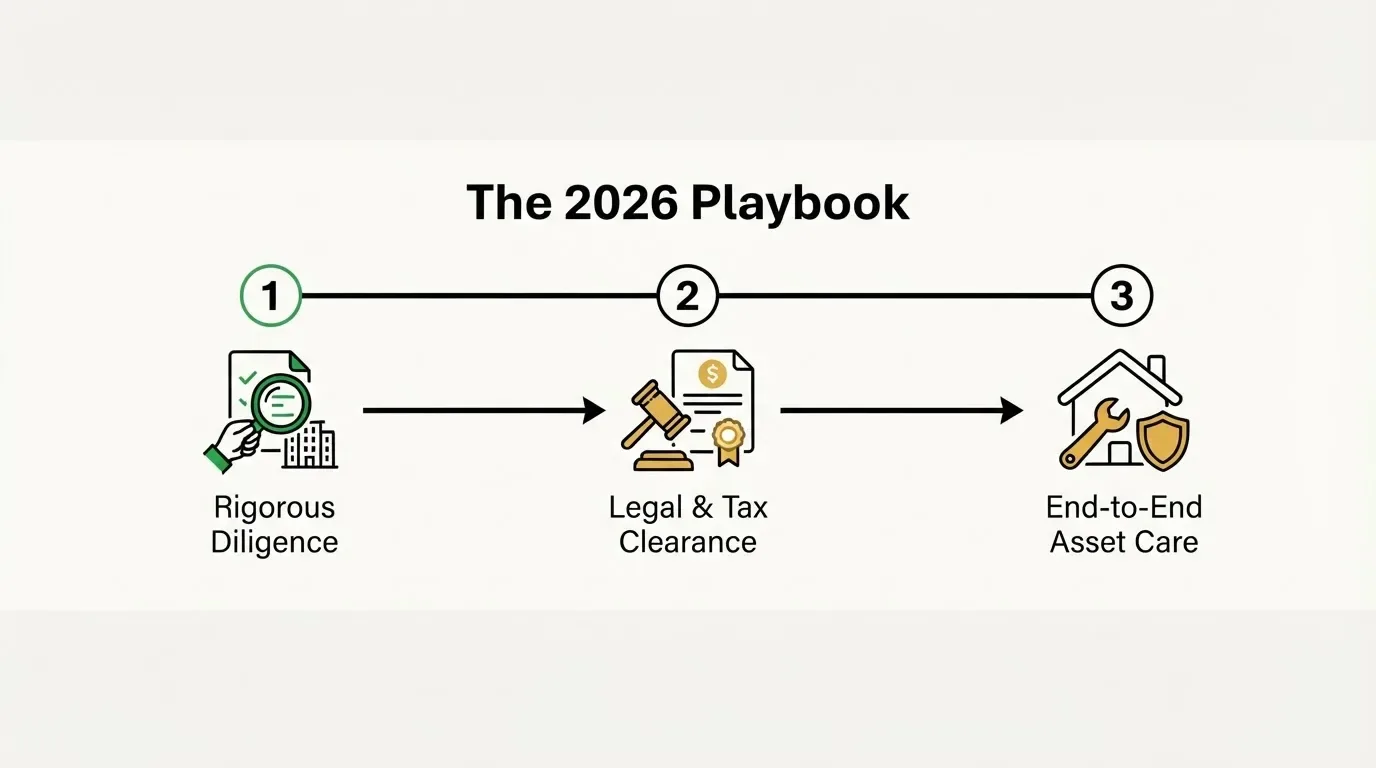
- Check the project on the state RERA portal. In West Bengal that is rera.wb.gov.in. Note the registration number, the approved plan and the completion date declared to the regulator.
- Get an independent title check from a property lawyer. Don't rely on the developer's own documents alone.
- Compare developers' delivery records. A brochure tells you what is promised; previous projects tell you what is delivered.
- Visit, or have someone you trust visit. Video walk-throughs help, but check the surroundings, approach road and construction progress in person if you can.
Our first-time buyer checklist goes through each step in detail.
Paperwork if you can't be there
Most NRIs buy without being in India for every step. A power of attorney lets a family member or adviser sign on your behalf. A power of attorney signed abroad must be attested at an Indian embassy or consulate, or notarised and apostilled, and then stamped in India within the time limit. Keep its scope narrow — for example, limited to the registration of one named property.
Costs and tax to plan for
- Stamp duty and registration fee are paid at registration. In West Bengal, check the current rates with the official calculator on wbregistration.gov.in.
- GST applies to flats bought while under construction.
- TDS when you buy. Buyers of property worth ₹50 lakh or more must deduct tax at source from the payment to the seller. If the seller is an NRI, the rate and the process are different and higher — get the seller's tax position confirmed in writing before you pay.
- Rent and sale later. If you let the property, your tenant must deduct tax on the rent paid to you. When you sell, capital gains tax applies. Rules change with each Budget, so take advice from a tax professional who handles NRI cases.
Getting money back out
NRIs can generally send abroad the sale proceeds of up to two residential properties bought with money brought into India, after tax, and up to USD 1 million a financial year from an NRO account. Your bank will ask for proof of how the property was paid for — which is why the remittance records matter. Our guide to selling property in Kolkata as an NRI covers the sale side in detail.
After possession
Owning from abroad is where many NRI investments disappoint. Plan early for:
- Tenant search, verification and a registered agreement, if you will let the flat.
- Rent collection and tax deduction by the tenant.
- Maintenance, society dues and property tax.
- Regular inspections, so small problems are fixed before they become expensive ones.
Our guide to NRI property management explains what to expect from a manager and what to ask before you sign.
How we help NRI buyers
Urban Hub Realty works with several Kolkata developers, so we can shortlist and compare projects across them, arrange site visits or video walk-throughs, coordinate the paperwork, and — once you own the flat — look after it. Message us on WhatsApp; we reply the same day, wherever you are.